
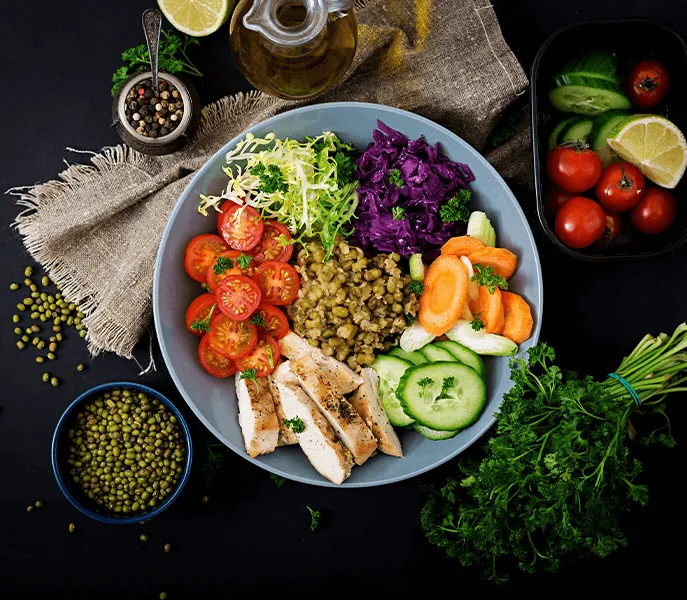
You’re Eating “Healthy”... So Why Aren’t You Seeing Results?
You’re working out consistently. You’re putting in the effort. Maybe you’ve even cleaned up your diet.
So why aren’t you seeing the results you expected?
The answer isn’t always that you need to train harder or eat less. In many cases, it’s a handful of small nutrition mistakes that quietly add up and keep you from making progress.
Here are some of the most common ones.
1. You’re Eating “Healthy” - But Too Much
One of the biggest misconceptions about nutrition is that healthy food automatically means you can eat unlimited amounts of it.
Avocado, nuts, olive oil, nut butter, granola, smoothies and other nutrient-dense foods can absolutely be part of a healthy diet. But they can also be surprisingly calorie-dense.
You don't need to obsessively count every calorie, but understanding portions matters. Excess calories can have the same effect - regardless of their type.
TIP: Healthy doesn't automatically mean low-calorie.
2. You’re Not Eating Enough Protein
Protein plays a major role in building and maintaining muscle, recovering from training, and keeping you feeling full.
Yet many people start their day with coffee and a carb-heavy breakfast, have a light lunch, and don't get a meaningful amount of protein until dinner.
Try building each meal around a quality protein source: eggs, Greek yogurt, chicken, fish, lean beef, tofu, cottage cheese or another protein-rich option.
TIP: Make protein the anchor of your meals, not an afterthought.
3. You’re Drinking More Calories Than You Realize
Your morning latte. A smoothie. A sports drink. A couple of beers after work. A handful of "healthy" juices throughout the day.
None of these things are inherently bad. But liquid calories are easy to consume without feeling particularly full.
If you're struggling to understand why your nutrition isn't matching your goals, take a look at what you're drinking.
TIP: Sometimes the easiest calories to cut aren't on your plate.
4. You’re Eating Too Little During the Day
This one sounds counterintuitive.
You want to lose weight, so you barely eat breakfast and lunch. By the time dinner rolls around, you're starving.
Suddenly, you're eating half the kitchen.
Extreme restrictions during the day can make it much harder to control your appetite later.
Instead of trying to "save calories" by starving yourself until dinner, focus on eating satisfying meals throughout the day that contain protein, fiber and enough food to keep you going.
TIP: Less isn’t better. Focus on consistency throughout the day.
5. You’re Underestimating the Weekend
Monday through Friday can be dialed in.
Then Friday night arrives.
A few drinks. Dinner out. Brunch Saturday. Snacks at a party. Sunday takeout.
You don't have to live like a monk on the weekends, but remember that your body doesn't reset on Monday morning.
If you're consistently eating in a calorie deficit during the week and then significantly overshooting it on the weekend, your weekly average may look very different from what you think.
TIP: Enjoy your weekends. Just don't let two days completely erase five days of consistency.
6. You’re Changing Things Too Often
You cut carbs.
Then you try intermittent fasting.
Then you go high protein.
Then you eliminate sugar.
Then you start a new supplement stack.
Then you decide you need to eat completely "clean."
The problem?
You never stick with anything long enough to determine whether it actually works.
Nutrition doesn't need to be complicated. Find an approach that fits your lifestyle, goals and preferences—and give it enough time to work.
TIP: Consistency beats novelty.
7. You’re Treating Food as “Good” or “Bad”
Pizza isn't bad.
Cookies aren't bad.
Carbs aren't bad.
A salad isn't automatically good.
Labeling foods as morally good or bad can create an unhealthy relationship with eating and make sustainable nutrition much harder.
Instead, think about frequency and context.
Your diet can include foods you enjoy while still being overwhelmingly made up of foods that support your goals.
You don't need a perfect diet.
TIP: You need a nutrition plan you can actually live with.
8. You’re Not Eating Enough Fiber
Protein gets most of the attention, but fiber deserves plenty of it.
Fruits, vegetables, beans, whole grains, potatoes and other high-fiber foods can help keep meals satisfying while providing important nutrients.
Instead of worrying about whether every meal is "clean," look for opportunities to add a fruit or vegetable.
TIP: Build more color into your plate.
9. You’re Rewarding Workouts With Food
You crushed your workout. You burned a bunch of calories.
So you earned that giant post-workout meal, right?
Maybe - but this mindset can easily lead to eating back more calories than you burned.
Exercise is incredibly valuable for reasons far beyond calorie expenditure. It helps improve strength, cardiovascular fitness, performance, mood and overall health.
Don't think of exercise as something you need to "pay back" with food.
TIP: Train because you want to become more capable - not because you need to earn your next meal.
10. You’re Looking for Perfect Instead of Consistent
This might be the biggest mistake of all.
You eat perfectly Monday through Thursday, have an indulgent meal Friday, and decide you've "blown it."
So you give up for the weekend and promise yourself you'll start again Monday.
Don't.
One meal doesn't ruin your progress. One workout doesn't transform your body either.
Your results are built from what you do over and over again.
TIP: Aim for better, not perfect.
The Bottom Line
Nutrition doesn't need to be complicated. Keep it simple!
You don't necessarily need another diet, another cleanse, or another list of foods you're not allowed to eat.
Start with the basics:
- Eat enough protein
- Eat plenty of fruits and vegetables
- Pay attention to portions
- Drink more water
- Limit liquid calories
- Don't let weekends derail your consistency
- Eat in a way that supports your training/goals
- Give your approach enough time to work
And most importantly, build a way of eating that you can maintain long after you've reached your goal.
Because the best nutrition plan isn't the one that works for three weeks. It's the one you can stick with for years.


.jpg)


